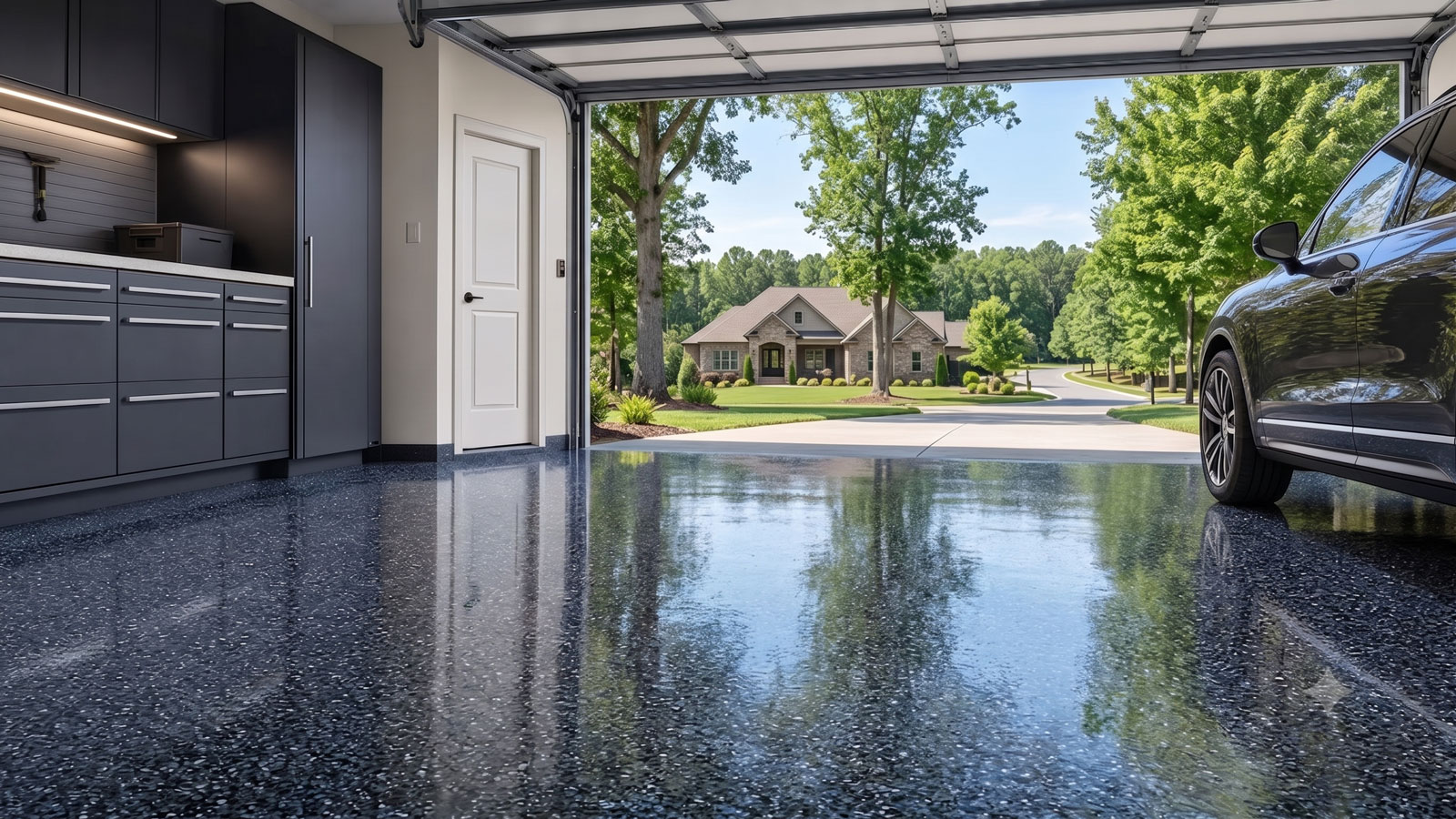
Garage Floor Coating in Timnath, CO
Floor Coating Services in Timnath, CO
Timnath is a rapidly expanding Northern Colorado town whose municipal planning makes its building eras especially important to distinguish. Its 2020 adopted Comprehensive Plan preceded the Growing with Purpose 2045 update launched in July 2025. The town estimated its population at 10,880 in December 2024 and held further planning open houses in September 2025 and March 2026. These dated facts show active neighborhood development, not that every private garage has new concrete or is ready for a coating.
Timnath's Planning Services department coordinates with engineering, irrigation ditch owners, utility districts and the Poudre Fire Authority and maintains a Master Drainage Plan alongside its transportation and land-use standards. That is an unusually specific mix of development review and water infrastructure for homeowners to understand. It does not establish actual moisture beneath one garage; the driveway, downspouts and slab must be inspected independently.
A newly built Timnath garage might have curing compounds or sealers, while an established outbuilding may have oil, old paint or patches. Winter tire traffic can also bring snowmelt and grit into the room. A suitable epoxy, polyaspartic or decorative-flake finish can simplify cleaning of prepared sound concrete, but it cannot fix grade, drainage or movement. Ask for a complete preparation and cure plan.
Local Market Insight
Timnath reported an estimated 10,880 residents in December 2024, maintains a 2020 adopted plan, and began Growing with Purpose 2045 in July 2025. Its development review explicitly consults ditch owners and a Master Drainage Plan, but neither shows private slab moisture.
What Affects the Cost of Garage Floor Coating in Timnath?
Timnath homeowners may have newer subdivision concrete or an older garage with previous finishes. Costs depend on actual surface treatments, cracks, preparation and whether vehicle parking can be displaced during application.
Growth plans and drainage maps are not property inspections. A quote should identify any actual threshold-water issue and separate drainage remediation from concrete grinding, repair and the selected resin system.
- Curing compounds in new neighborhoods: With active construction, some floors are newly placed. Verify cure history, surface sealers and moisture suitability rather than treating newness as evidence of coating readiness.
- Previous finishes in older spaces: An established garage or accessory building may have been painted or used for tools. Oil, previous resin and weak repairs may require more surface removal.
- Ditches and driveway drainage: Town development review involves irrigation ditch owners and Master Drainage planning. On a private lot, actual driveway slope, runoff and gutter outlets determine what needs investigation.
- Movement and surface repair: Pitting, crack repairs, joints and weak areas should be assessed before coating. A decorative layer cannot stabilize an actively moving slab.
- Garage clearance and edge work: Two-car bays, steps, storage and utility equipment affect preparation. Agree on clearing and tool staging rather than assuming all new suburban garages are identical.
- Texture and winter timing: Snowmelt, grit, topcoat texture and manufacturer curing temperatures influence finish choice and return-to-parking plans. Fast resin chemistry does not remove required grinding.
Call for a clear, project-specific estimate — or request one online.
Timnath's 2045 Growth Process and New-Concrete Readiness
Timnath adopted a Comprehensive Plan in 2020 and began a new Growing with Purpose 2045 process in July 2025. The town's planning department reported an estimated 10,880 residents as of December 2024. Subsequent public engagement included town-hall open houses in September 2025 and another meeting at Timnath Town Center on March 25, 2026. Those numbers and dates demonstrate rapid residential change, but they are not evidence of the condition of an occupied garage slab.
For recently completed construction, ask when concrete was poured and what curing compound or sealer the builder used. Some surfaces need more time or grinding before a coating system is appropriate. The installer should check moisture suitability and mechanical profile rather than rely on a new home's closing date.
Older or previously altered garage floors have different questions: paint, oil, patches, cracking or previous flake coatings. Remove incompatible materials, inspect structural soundness and distinguish routine repairs from active movement. A smooth newer surface can be less ready than a properly prepared older floor.
A useful Timnath proposal documents these observations, the grinding and repair methods, coating layers and curing restrictions. This helps homeowners compare the actual installations rather than paying more or less simply because of their subdivision's age.
Timnath Drainage Coordination and Winter Garage Maintenance
Timnath's Planning Services documents state that subdivision review involves its Engineering Department, utilities, ditch owners and master drainage standards. Such coordination matters in a fast-growing Front Range town where water delivery systems and road construction interact with new neighborhoods. It does not say whether a particular garage takes on water or has a moisture-sensitive slab.
At an address, look at driveway pitch, downspout discharge, threshold elevations and whether damp spots persist after dry weather. Normal winter snowmelt from parked vehicles is distinct from exterior runoff or internal slab moisture. If a low driveway directs water toward the building, correct drainage separately before coating.
A properly installed floor can make tracked grit and slush easier to clean when the concrete is sound and properly prepared. It does not remove the need for winter cleanup and cannot make a leaking garage structurally waterproof. Existing contaminants and damaged areas require attention before a finish is applied.
Choose a texture based on wet shoes, tire traffic and household equipment. Ask for samples and product-specific application temperature, moisture limits and vehicle return times. The entire preparation and repair sequence—not a product's advertised quick cure—determines a realistic schedule.
Frequently Asked Questions
Does Timnath's rapid growth make all garages new?
No. Municipal population growth and new subdivisions do not date an individual slab. Older buildings, additions and newer repours can all have different surface conditions.
Can a brand-new Timnath garage receive epoxy immediately?
Only if the slab meets the proposed system's cure, moisture, sealer and profiling requirements. An installer should verify readiness instead of relying on the construction date.
Do irrigation ditches mean my garage floor will be damp?
No. Public ditch and drainage coordination is not a moisture test. Inspect the specific driveway and concrete before deciding whether any water issue exists.
Will polyaspartic prevent winter snowmelt cleanup?
No. Even a suitable finished floor requires routine removal of water, grit and salts. A coating may improve cleaning but does not keep snow off vehicles.
What should the Timnath estimate describe?
Request mechanical profiling, old-treatment removal, crack repairs, moisture checks if indicated, finish layers, texture, edge work and realistic return-to-service timing.