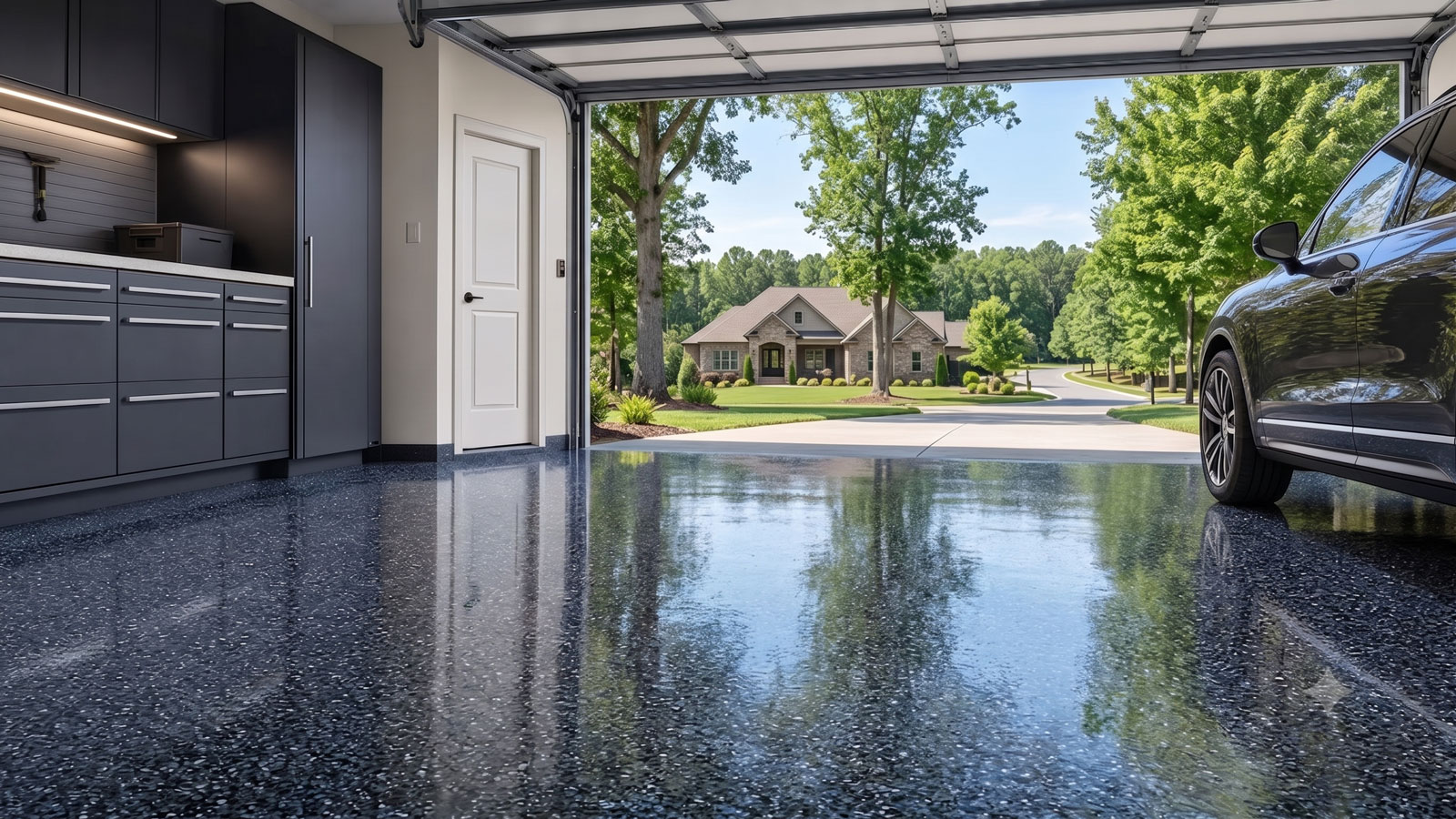
Garage Floor Coating in Fort Collins, CO
Floor Coating Services in Fort Collins, CO
Fort Collins' City Plan was adopted by City Council on April 16, 2019 after a yearlong public process that began in February 2018. That citywide plan addresses housing and growth alongside transportation and natural systems, so an established Old Town-area garage and a newer southeast-side attached bay may have very different histories. A home's age does not prove the age of the concrete in its garage: a slab can be repoured, patched or coated long after construction.
The city also manages an extensive stormwater system in the Cache la Poudre River region. Public drainage planning is important to the northern Front Range, but it cannot establish whether a particular garage has active water entry or moisture moving through concrete. Snow from winter driving can bring salty grit indoors, while water traveling down a driveway or from a gutter is a separate issue. Each should be identified before selecting any resin floor system.
For Fort Collins homeowners, an epoxy, polyaspartic or decorative-flake floor should be specified only after a slab inspection. Look for previous paint or sealer, patch history, pitting, crack movement, moisture suitability and garage use. A well-installed continuous finish can improve ordinary cleanup, but it cannot replace drainage work or make a structurally weak floor sound.
Local Market Insight
Fort Collins City Plan was unanimously adopted April 16, 2019 following a process launched in February 2018. Its housing and growth policies coexist with Cache la Poudre watershed and municipal stormwater management, while winter roads create a separate tracked-debris consideration.
What Affects the Cost of Garage Floor Coating in Fort Collins?
A Fort Collins garage can involve newer construction compounds or layers of older floor paint and patching. Mechanical preparation and removal labor may change costs more than a nominal two-car garage measurement.
Ask the estimator to distinguish tracked snow from a real drainage problem. The quote should include an actual concrete assessment, surface profile, repairs, system layers and cure restrictions suitable for the chosen installation season.
- Slab and structure age: A garage near older residential blocks could have newer replacement concrete; a recent home can still have sealing or curing products. Check floor history rather than using the home construction date as a proxy.
- Previous coatings and contaminants: Oil, paint and old resin may require mechanical removal before bonding. The installer should inspect the entire floor including areas beneath storage.
- Snow and roadway residue: Winter driving can deposit grit and deicing residue. Existing contamination must be addressed before coating and normal cleaning will still be needed afterward.
- Runoff and slab moisture: A driveway sloped toward the overhead door can introduce exterior water. That is different from suspected substrate moisture; the former may need grading and the latter suitable product-specific evaluation.
- Cracks, joints and layout: Stable cracks, pitting and patches may change repair scope, while active movement requires more attention. Steps, equipment and drains also change preparation time.
- Texture and seasonal curing: A textured flake topcoat, UV exposure near doors and the manufacturer's air and surface temperature limits influence system selection, cost and parking downtime.
Call for a clear, project-specific estimate — or request one online.
Fort Collins' 2019 City Plan and Changing Garage Histories
Fort Collins began its City Plan update in February 2018, and City Council unanimously adopted the resulting plan on April 16, 2019. The plan addresses neighborhoods, future land uses, mobility and environmental goals as the city changes. That formal timeline provides context for comparing established residential areas with more recent expansion, but it is not evidence that any particular garage slab has become defective.
A home in an older neighborhood may have a detached garage that was constructed later or concrete that was repoured during a renovation. Ask about known replacement dates, paint, oil, cracking and repairs. A recently built garage may contain curing compounds or sealers that are not compatible with immediate resin application. Both need an inspection of the actual substrate.
Mechanical grinding should deliver the surface profile required by the selected coating system and expose unsound material. An installer should distinguish repairable surface pitting from active crack movement and identify any uncertain old film rather than claiming new material will bond over it without testing.
The homeowner's estimate should describe preparation, removal, concrete repair, coating layers, finished texture and return-to-parking time. An attractive square-foot quote can overlook the very work that determines whether the topcoat stays bonded.
Poudre-Watershed Runoff and Northern Colorado Winter Use
Fort Collins' public stormwater work operates within the Cache la Poudre watershed, and the city's planning includes drainage and flooding considerations. Those are broader public responsibilities, not proof that one garage is wet. Northern Colorado winter weather supplies another distinct source of water: vehicles returning with snow, road grit and slush.
A homeowner should observe the floor after storms and on dry days. Are puddles under parked cars, or does water flow toward the building from the driveway or a downspout? Is a dark patch present even without recent vehicle traffic? These different patterns call for routine maintenance, exterior drainage attention or an appropriate slab-moisture evaluation.
Epoxy and polyaspartic floors on sound prepared concrete may be easier to sweep and rinse, but they cannot reverse a sloping driveway, stop floodwater or prevent movement beneath the slab. Before installation, old contaminants, paints and weak concrete need to be treated appropriately.
Texture and cure windows matter in colder weather. Request a physical finish sample and written manufacturer limits for temperature, moisture and vehicle return. A one-day coating promise should never replace a full explanation of grinding, repairs, application layers and the actual conditions at the job.
Frequently Asked Questions
Does a Fort Collins City Plan neighborhood designation tell me my slab age?
No. Land-use planning does not identify when a specific garage was poured or repoured. Inspect the actual floor, its old finishes and repairs before deciding how to prepare it.
Can coating eliminate cleanup from winter driving?
No. Snow, grit and deicing residues still arrive on cars. A properly installed finished surface may simplify cleaning, but maintenance remains necessary.
Will epoxy fix a driveway that sends water into the garage?
No. Exterior drainage, slope and threshold problems require a separate solution; a decorative finish cannot redirect runoff.
Can a recent concrete pour be coated without grinding?
Do not assume so. Curing treatments, sealers, moisture suitability and the manufacturer's profiling requirement need assessment before choosing the system.
What details matter in a Fort Collins bid?
Ask for old-coating removal, mechanical preparation, cracks and patches, moisture evaluation when warranted, full layers, texture, edges and parking return rules.