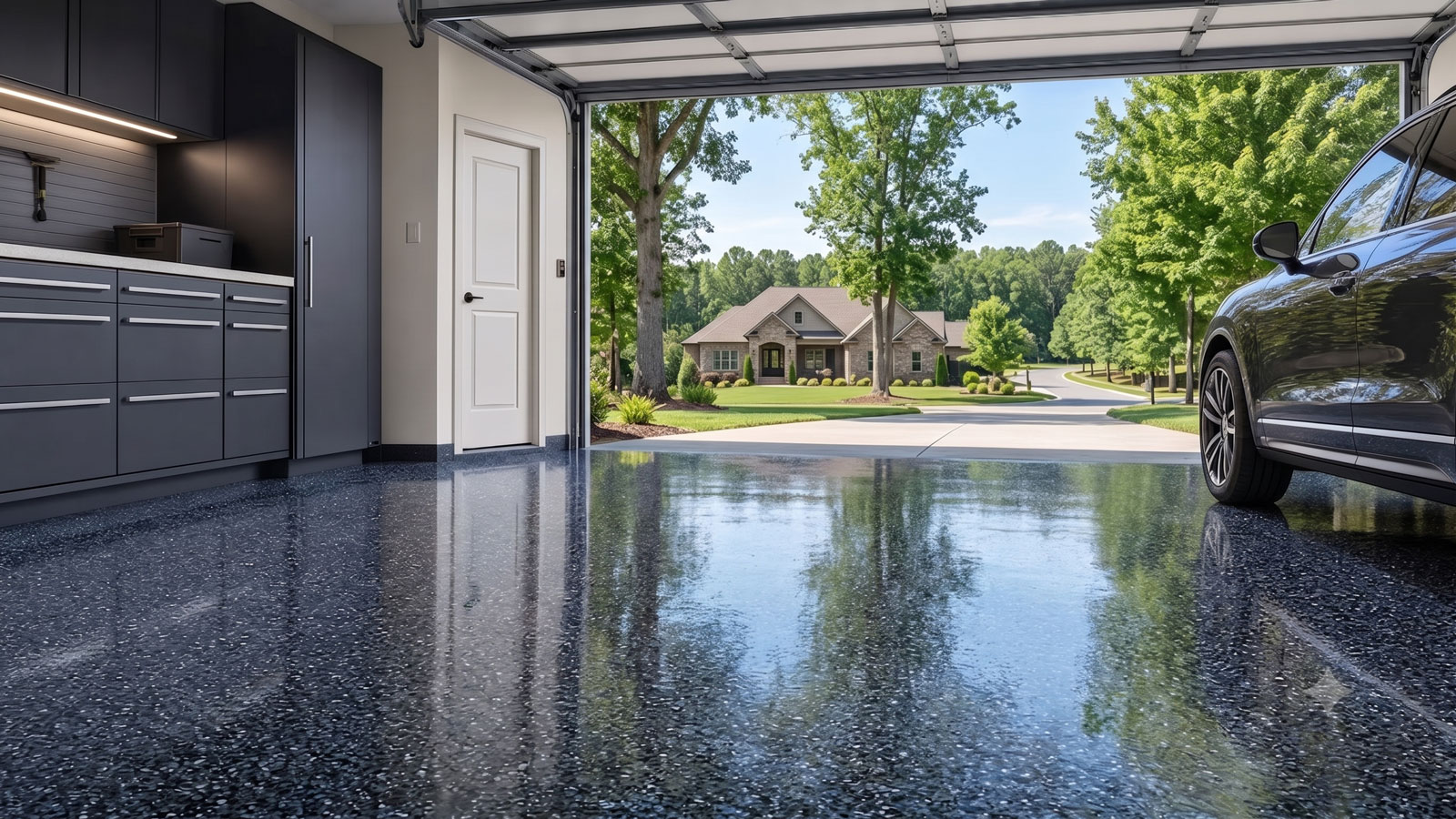
Garage Floor Coating in Johnstown, CO
Floor Coating Services in Johnstown, CO
Johnstown's growth reaches across Northern Colorado between Loveland and Greeley. Official master-planning materials cover housing, land use, utilities and recreation. Engineering criteria require development drainage reports to discuss overflow toward the Little or Big Thompson River and identify downstream erosion, deposition and flow impacts. Chapter 6 also cautions against moving runoff between watershed basins, and requires developers to identify inadequate downstream capacity before proceeding. These specific regional requirements make water-routing a legitimate local project question, but they do not prove that any private garage contains water or damaged concrete. An estimator still needs to trace actual runoff at the home's threshold and assess whether the slab itself is dry and sound.
Johnstown has established town blocks alongside newer residential development. A recently poured garage may contain curing compounds, while a long-used floor might have old paint, oil and patches. House construction dates alone do not determine how much grinding or repair is needed.
Winter cars can also track slush and grit into the garage, a cleaning consideration distinct from exterior runoff. A suitable epoxy, polyaspartic or flake system can make sound concrete easier to maintain, but it cannot change driveway slope or stop structural movement. Inspect the actual slab before choosing a finish.
Local Market Insight
Johnstown storm-drain standards require developers to consider downstream runoff impacts and overflow paths to the Little and Big Thompson rivers. Those requirements inform drainage questions but are not a private concrete-moisture test.
What Affects the Cost of Garage Floor Coating in Johnstown?
A Johnstown estimate should reflect old treatments, new-construction sealers, cracks, access and the actual coating system rather than assumptions based on the region's river corridors.
Ask contractors to separate active water entry from normal winter tracking and describe removal, profiling, repairs, finish layers and curing.
- Previous floor treatment: Old paint, sealer or oil can affect adhesion and may require mechanical removal before coating.
- New concrete readiness: Curing compounds, moisture or invisible sealers can make recent concrete unsuitable without further preparation.
- Thompson drainage versus driveway: Town engineering studies address public runoff. Check actual driveway slope, downspouts and threshold wetting at the property.
- Cracks and old repairs: Inspect joints, weak patches, pitting and movement. A coating cannot stabilize structural problems.
- Garage storage and access: Storage, stairs, drains and equipment staging can add preparation and edge-work labor.
- Texture and cure window: Winter grit, flake texture, topcoat chemistry and acceptable application temperatures influence selection and downtime.
Call for a clear, project-specific estimate — or request one online.
Johnstown Growth and the Concrete Beneath a Garage
Johnstown publishes municipal master plans covering its community vision, housing, transportation and services. Its engineering criteria in Chapter 6 of the storm-drain standards separately require development applicants to discuss overflow paths to the Little and Big Thompson rivers. These formal documents demonstrate changing municipal infrastructure and residential development, not the construction history of a specific garage floor.
Ask whether a garage was constructed or repoured after the house, whether old epoxy or paint remains and whether patches or cracks are sound. Newer floors can carry curing compounds or sealers, while established workshops may contain embedded vehicle-fluid residues. These factors alter grinding and repair work.
A contractor should mechanically profile the floor to the selected system's requirements and remove incompatible layers. Active concrete movement and persistent dampness require evaluation rather than being hidden beneath resin. A glossy finish cannot compensate for weak material underneath.
Compare estimates based on the actual labor included: cleaning, coating removal, grinding, crack repairs, edges, finish layers and cure restrictions. The most useful price is one grounded in the inspected slab rather than a general square-foot assumption.
Little and Big Thompson Drainage and Winter Garage Conditions
Johnstown's storm-drain design criteria require applicants to discuss downstream changes, including erosion from greater flow velocity, sediment deposition, higher runoff peaks and debris movement. Preliminary and Final Drainage Reports must depict the overflow route toward the Little Thompson or Big Thompson River. The standards also caution about moving stormwater from one watershed basin into another. Those separate requirements help explain why drainage decisions are engineered at a community scale; they do not tell us whether a particular residential garage has experienced water entry. A homeowner comparing coating bids should instead document the actual driveway geometry, any historical waterlines and whether the concrete stayed damp after ordinary rain. The contractor can use those observations to decide whether to proceed, request moisture evaluation or exclude necessary exterior drainage repairs from the coating project.
At the garage, check actual water pathways: snowmelt beneath a parked vehicle, rain entering a low threshold, downspout discharge or dampness persisting after dry days. Each needs a different response. Ordinary tracking is a cleaning issue; recurring outside inflow can require drainage correction; unexplained substrate moisture needs appropriate evaluation.
A coating on sound prepared concrete may simplify the removal of grit, but it cannot redirect runoff from a driveway or act as floodproofing. It also cannot stabilize moving joints or structural cracks. Resolve those issues first.
For routine parking, consider traction, topcoat texture, cleaning requirements and the temperature limits of the selected system. Plan the full grinding and curing schedule before moving vehicles back into the garage.
Frequently Asked Questions
Do Johnstown's Thompson River drainage rules prove my garage is wet?
No. They regulate development runoff, not individual slab moisture. Inspect water at the doorway and actual concrete condition before recommending a coating.
Can epoxy repair a sloping driveway?
No. Exterior grading and threshold drainage need separate correction. Resin floors cannot redirect outside runoff.
Is new Johnstown concrete always ready for epoxy?
No. Verify curing history, sealers, moisture suitability and the mechanical surface profile required by the intended system.
Does a flake floor eliminate winter cleanup?
No. Cars still bring slush, road grit and dirt inside. A suitable coated floor can be easier to clean but still needs maintenance.
What belongs in a Johnstown coating quote?
Request old-coating removal, grinding, crack and patch repairs, moisture checks when indicated, complete layers, texture, edges and when vehicles can return.