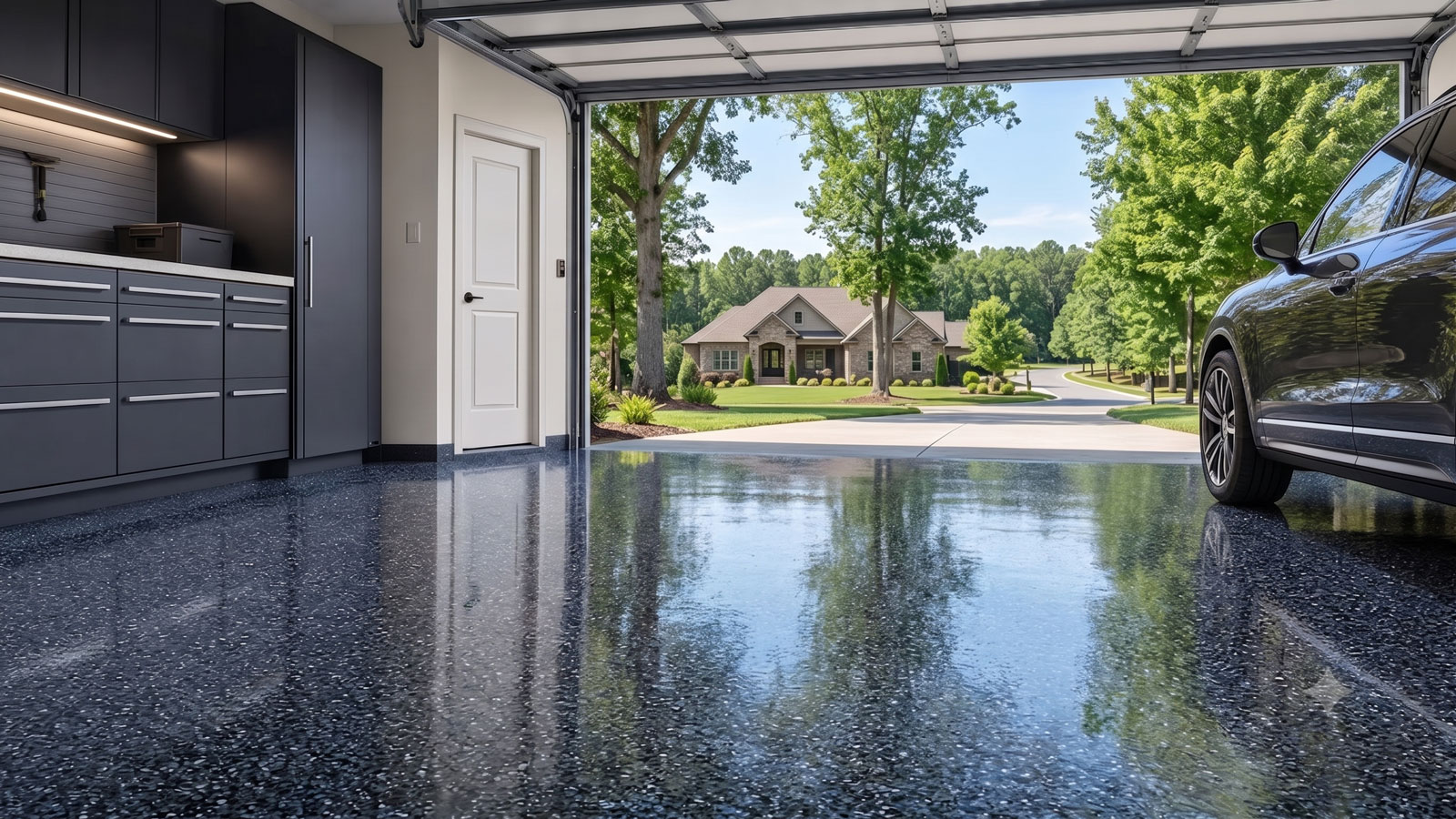
Garage Floor Coating in Loveland, CO
Floor Coating Services in Loveland, CO
Loveland's Big Thompson River history adds a concrete local consideration to garage-floor decisions. The city reports that the September 2013 flood caused $35 million in damage locally and killed two people, and it later created a Big Thompson River Corridor Master Plan. City Council approved a financing structure in June 2022 for work intended to reduce flood risks and improve the river corridor. Those documented public events make drainage a serious topic, but they do not establish whether a particular Loveland garage was flooded or has a moisture-damaged slab.
Loveland also contains historic neighborhoods, later residential development and garages built or repoured at different times. A property's location or house age cannot reveal old paint, oil contamination, cracks or curing treatments beneath a coating. Winter snowmelt and grit carried on vehicles are separate, everyday maintenance concerns from floodwater or persistent substrate moisture.
Before choosing epoxy, polyaspartic or a decorative-flake system, inspect the actual concrete, prior finishes and water history. A properly prepared continuous finish can make regular cleanup easier, but it cannot redirect the Big Thompson, stop stormwater across a driveway or stabilize moving concrete. A useful estimate separates these risks and fully describes preparation, repairs and cure conditions.
Local Market Insight
Loveland reports $35 million in damage and two deaths in the September 2013 Big Thompson flood, and approved financing in June 2022 for its river-corridor program. These regional facts explain why drainage deserves review but do not diagnose an individual garage.
What Affects the Cost of Garage Floor Coating in Loveland?
Loveland coating costs depend on the actual floor, not whether a home lies within a floodplain map or an established neighborhood. Previous paint, patching, sealers, cracks and moisture evaluation can change preparation labor.
Ask contractors to identify actual water pathways and separately address any drainage problem. The coating quote should specify grinding, repairs, complete resin layers, finish texture and when vehicles may safely return.
- Flood history versus slab condition: Loveland's flood program is a public response to 2013 events. Do not assume a garage was affected; inspect actual signs of water entry, repairs and concrete soundness.
- Old paint and contamination: Oil, sealers and earlier coatings may require mechanical removal and cleaning before reliable adhesion. A smooth appearance is not sufficient evidence of a sound bonding surface.
- Snow and road-treatment residue: Winter vehicles can leave slush and grit on floors. Existing contamination needs preparation, and a new finish still requires routine cleaning.
- Cracks, patches and movement: Examine joints, pitting and prior repairs before resurfacing. Structural movement or seriously weakened concrete needs evaluation outside cosmetic finishing.
- Threshold grading and moisture: A driveway that sends rainwater inside needs exterior correction. Moisture within the slab is a separate product-compatibility question requiring assessment where warranted.
- Finish and cold-season schedule: Decorative flake texture, sunlight and manufacturer temperature limits influence the full system. Include preparation and cure times, not only advertised topcoat speed.
Call for a clear, project-specific estimate — or request one online.
The Big Thompson Flood and What It Does Not Say About One Garage
Loveland's public stormwater information describes the September 2013 Big Thompson flood, in which two lives were lost and damage within the city totaled $35 million. The city subsequently developed a Big Thompson River Corridor Master Plan and approved a funding mechanism in June 2022. Its program discusses improvements near U.S. Highway 287, updated floodplain mapping and the river's natural functions. Those sources establish flood history and ongoing infrastructure work, but provide no diagnosis of concrete under a particular garage.
If a homeowner remembers actual water entry, the contractor should examine the floor for weak patches, old finishes, cracking, persistent dampness and prior repairs. If no water entry is known, do not infer damage simply from Loveland's regional history or an address near the river. The proposed resin must bond to the slab as it exists today.
An epoxy or polyaspartic finish is not floodproofing. It cannot redirect a river, hold back street runoff or fix a driveway sloping toward a low garage door. Active water-entry or structural issues should be corrected separately before expensive decorative materials are applied.
The estimate should document what was inspected, what preparation is needed, how contamination or failed coatings will be removed and whether any moisture assessment is warranted. That distinguishes responsible floor coating from unsupported disaster-protection marketing.
Loveland Development, Winter Parking and Coating Preparation
Loveland's planning and public works documents cover neighborhoods of different building eras as well as drainage infrastructure along the Big Thompson and Highway 402 corridors. A detached garage may have been built years after its home; another floor may have been repoured after a renovation. Neither building age nor a regional flood map is a reliable description of slab condition.
Winter use is another local concern. Vehicles can bring meltwater, grit and deicing residue indoors, while a garage used for bicycles, storage or equipment may develop additional wear. Surface profiling must remove incompatible old material and provide the selected system's required bond. Cracks and joints need separate evaluation where movement is possible.
A properly installed, continuous coating may be easier to sweep and wipe than untreated porous concrete. It does not stop winter residue from entering, and it cannot change outside water flow. Choose texture and topcoat based on actual foot and tire traffic rather than a promise that the material eliminates maintenance.
Ask for a physical sample and installation conditions in writing. Cold weather can restrict permissible application temperatures, and surface repair may take longer than the final topcoat cure. Homeowners should schedule parking elsewhere until the whole system is ready for vehicles.
Frequently Asked Questions
Does the 2013 Loveland flood mean my garage concrete is damaged?
No. Citywide damage figures do not establish what happened at an individual property. Inspect actual water history, concrete soundness and prior repairs before deciding on preparation.
Can epoxy protect my garage from the Big Thompson flooding?
No. A decorative coating is not floodproofing and cannot prevent exterior water intrusion. Drainage and flood-risk mitigation require separate professional guidance.
Should road grit be removed before coating?
Yes. Existing contamination, failed paint and unsound surface material should be addressed during proper cleaning and grinding before the new system is applied.
Can a fast-curing resin skip crack repairs?
No. Repair and mechanical preparation requirements remain regardless of cure speed. Active structural movement needs appropriate assessment.
What does a Loveland coating bid need to specify?
Ask for old-finish removal, surface profiling, repairs, moisture checks where indicated, complete coating layers, finish texture and the full vehicle-return schedule.