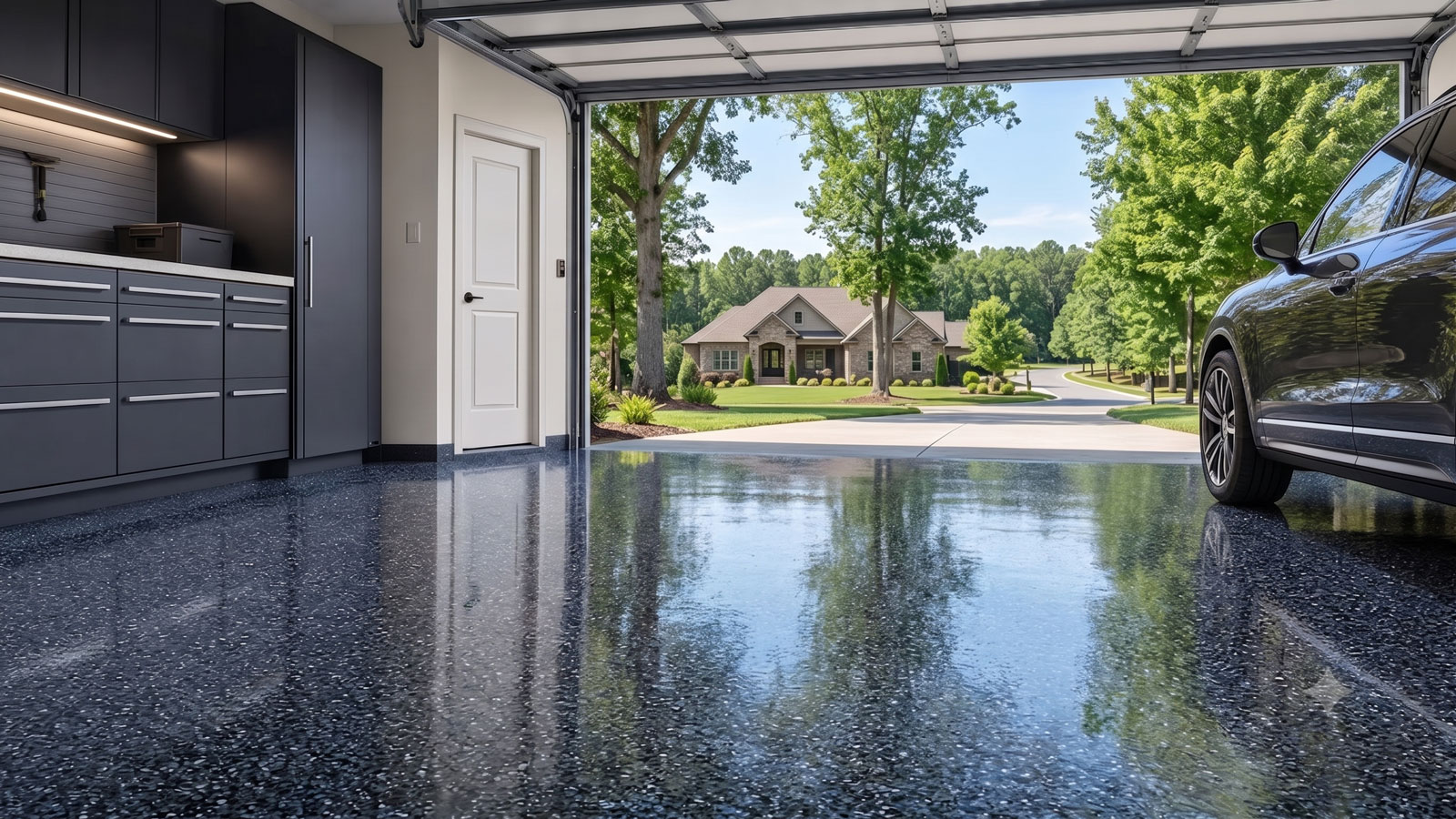
Garage Floor Coating in Wellington, CO
Floor Coating Services in Wellington, CO
Wellington, north of Fort Collins, has documented rapid growth and a distinctly town-scale planning history. Its 2021 Comprehensive Plan was adopted after a process that began in 2020, updating a 2014 plan. The official document describes a community that had grown from about 6,800 to about 10,000 residents and identifies a 14,527-acre Growth Management Area. Those figures indicate changing housing and infrastructure demands, but do not establish when a particular garage slab was poured or whether it is sound.
The plan also addresses water supply, land use, transportation and expansion of local facilities. Growth planning should not be confused with a private moisture diagnosis: water at a Wellington garage may come from snowy vehicles, driveway runoff or the concrete itself. Each has different implications for repair, surface testing and coating installation.
A newer garage can contain curing products or sealers, while a long-used floor may have paint, oil, pitting or patched cracks. Before selecting epoxy, polyaspartic or decorative flakes, inspect the slab and how the room is used. A continuous coating may simplify cleanup of tracked grit when properly bonded, but it cannot stop exterior runoff or stabilize structural movement.
Local Market Insight
Wellington adopted its 2021 Comprehensive Plan after updating 2014 planning, citing growth from roughly 6,800 to 10,000 residents and a 14,527-acre Growth Management Area. These quantitative local anchors make construction variation meaningful, not automatically defective.
What Affects the Cost of Garage Floor Coating in Wellington?
Wellington garage jobs may involve brand-new construction or an established floor modified over time. Surface treatments, actual cracks, access and cleaning needs affect price more than a neighborhood's development decade.
Regional water and infrastructure plans do not decide whether a concrete floor is ready for coating. Ask for property observations, removal, repairs, system details and a realistic temperature-dependent curing schedule.
- Recent pours and curing materials: New subdivisions can include recently poured concrete with curing compounds or sealers. Verify moisture suitability and required grinding before applying coatings.
- Prior use on established slabs: Old floor paint, oil and repairs may need removal and additional preparation. The homeowner's actual use history is more informative than townwide housing-growth figures.
- Snow and deicing deposits: Cars returning from winter roads can track grit, snow and residue indoors. Remove contamination before installation and continue regular cleanup after coating.
- Driveway runoff and wet patches: Identify whether water comes through the door or remains within the slab. An exterior grade issue calls for a different solution from a moisture-compatibility test.
- Cracks, edges and equipment: Pitting, patched joints, storage, steps and garage size affect grinding and repairs. Distinguish stable surface defects from movement that needs structural evaluation.
- Flakes, topcoat and cure: Finish texture, UV exposure near a door and cold-weather temperature limits affect system selection. Compare all layers and return-to-parking instructions.
Call for a clear, project-specific estimate — or request one online.
Wellington Growth from Its 2014 Plan to the 2021 Update
The Town of Wellington's 2021 Comprehensive Plan traces its planning update to a process launched in 2020 and describes the need to revisit its 2014 plan. It refers to growth from approximately 6,800 to 10,000 residents and identifies a 14,527-acre Growth Management Area beyond current town limits. The plan also discusses future annexations, diversification of housing and necessary infrastructure. These are substantial documentary facts, but cannot reveal the condition of a specific garage slab.
In newer neighborhoods, ask about concrete pour and curing dates and whether a sealer or curing compound was used. In established areas, look for old paint, patchwork, vehicle-fluid staining and earlier repairs. A house's construction year does not prove the age of its garage floor, especially if the space has been modified.
An installer should mechanically profile concrete to the selected system's requirements and evaluate any old coatings and weak areas. Unexplained moisture or ongoing movement needs further assessment rather than being concealed beneath decorative flakes.
A detailed estimate should spell out old-film removal, grinding, crack treatment, moisture checks if relevant, coating layers and curing. A written plan also helps a household decide where to keep vehicles while its garage is inaccessible.
Wellington Water Planning and Winter Floor Maintenance
Wellington's Comprehensive Plan treats water supply, wastewater, streets and growth management as connected town priorities. Such policies help plan future development but do not establish moisture conditions beneath an existing garage. Northern Front Range winter weather adds a different, practical source of wetness: snowy and gritty vehicles parked indoors.
Look for where water actually appears. Wet tires can leave localized puddles without any drainage defect. Rainwater crossing a low entrance is an exterior grade question, while unexplained dark concrete after dry conditions may justify substrate evaluation against coating requirements.
A continuous epoxy or polyaspartic system can make grit easier to remove from properly prepared sound concrete. It cannot keep snow and salts from entering on vehicles, fix a misgraded driveway or prevent a structural crack from moving. Prep and repair must come before product selection.
Ask about texture for wet shoes, cleaning techniques and suitable installation conditions. Cold garage temperatures can affect cure schedules, so the final quote should distinguish the application day from the date vehicles can safely return.
Frequently Asked Questions
Does Wellington's population growth mean my garage slab is new?
No. The town's population and land-use plans describe community change, not the construction history of a specific property. Ask about prior pours, sealer and repairs.
Is a newly finished concrete floor ready for epoxy?
Not automatically. Curing products, moisture suitability and mechanical profile requirements need confirmation for the proposed system.
Can a coating fix water entering down my driveway?
No. Exterior drainage and threshold work should be addressed independently of decorative floor coating.
Will coating stop winter salt and grit tracking?
No. Vehicles still bring debris inside; a suitable finish may simplify cleaning, but maintenance remains necessary.
What details should a Wellington installer provide?
Request inspection findings, coating removal, grinding, repairs, any moisture checks, finish layers, texture and permitted return-to-parking time.